
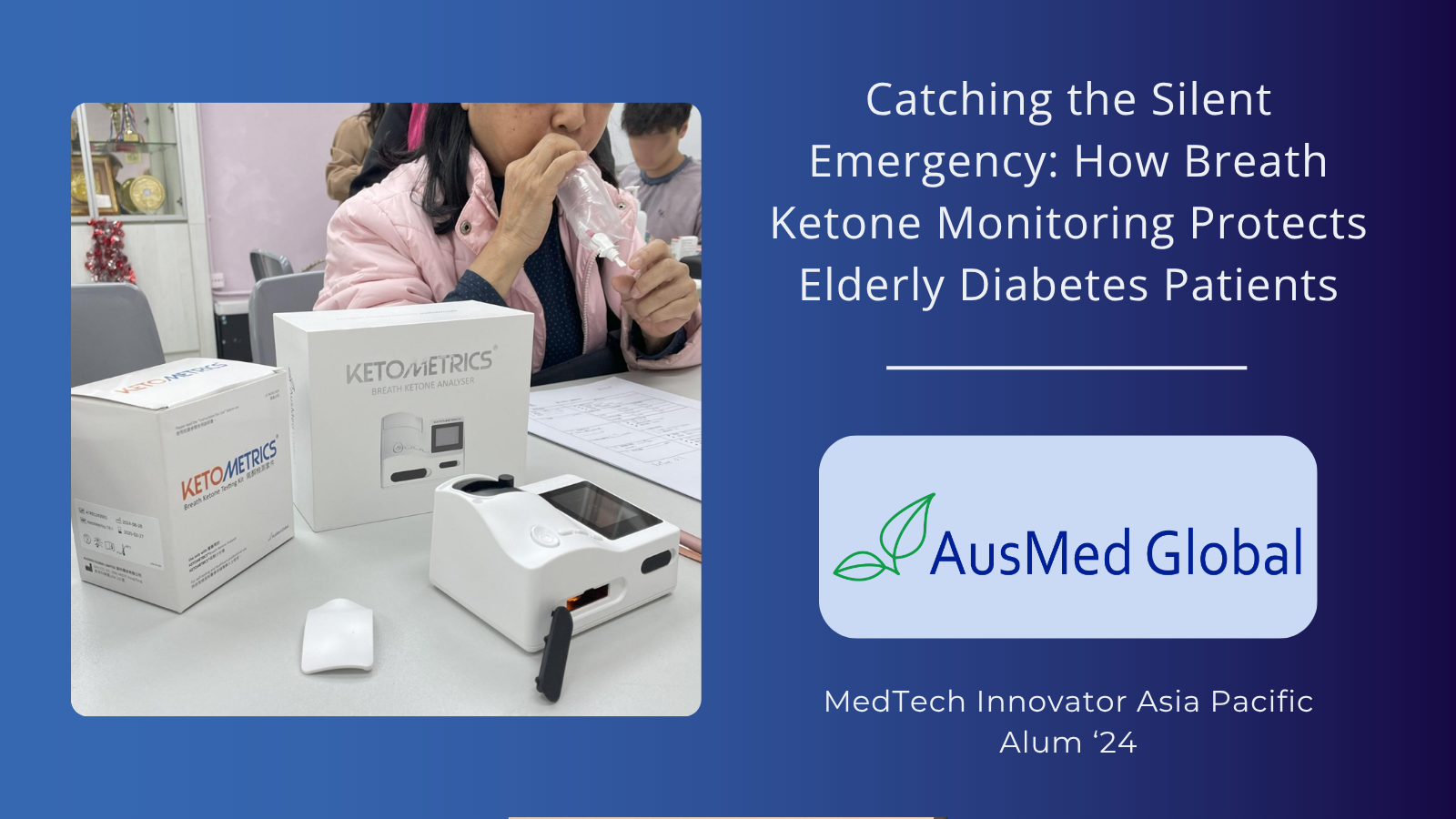
Catching the Silent Emergency: How Breath Ketone Monitoring Protects Elderly Diabetes Patients
At MedTech Innovator we empower healthtech companies to bring groundbreaking solutions to patients in need. Our Patient Stories series highlights the real-world clinical impact of the companies we support—showcasing how their technologies are transforming patient care, improving outcomes, and advancing healthcare. AusMed Global was a participant in the 2024 MedTech Innovator Asia Pacific cohort.
Diabetic ketoacidosis (DKA) is among the most dangerous acute complications of diabetes, yet it begins almost imperceptibly. Fatigue. A touch of nausea. Unusual thirst. Reduced appetite. In a younger person, these symptoms might prompt a call to a doctor. In an older adult living with diabetes, they are easily filed away as part of the ordinary texture of aging, noticed, perhaps, but not acted upon.
The consequences of that inaction can be severe. Delayed recognition of DKA leads to intensive care admissions, prolonged hospital stays, and deaths that, in many cases, need not have happened. There is a dangerous gap between the moment the body begins to slip into a metabolic crisis and the moment that crisis reaches a clinician’s attention. Better awareness and easier monitoring tools can close that gap, but both are currently insufficient.
What the Numbers Reveal
A community study of elderly diabetes patients in Hong Kong has produced findings that are at once striking and clarifying. Among participants aged 60 and over with Type 2 diabetes, 67.3% had never heard of DKA, a potentially fatal complication of the very condition they were living with. More than half reported having experienced warning symptoms. Yet of those who had symptoms, 65.5% did not seek help, or tell a family member.
The Euglycemic Complication
Awareness of DKA is made harder by a variant of the condition that defies the most intuitive safeguard: blood glucose monitoring. Euglycemic DKA (EDKA) occurs when ketoacidosis develops even as glucose levels remain within what appears to be an acceptable range. Patients on SGLT-2 inhibitors, a class of medications increasingly prescribed for Type 2 diabetes, are at particular risk. EDKA means that relying on glucose readings alone is not sufficient. Ketone monitoring is essential, and it must be practical enough to happen regularly.
The challenge, then, is not primarily scientific. The chemistry of ketone detection is well understood. The challenge is practical and behavioural: how do you make routine ketone monitoring something that elderly patients, caregivers, and community health workers will actually do?
A Non-Invasive Path Forward
The answer, emerging from this cohort research, points toward breath ketone testing. When survey participants were asked about their preferences, 70% of adults under 65 preferred a non-invasive breath test over blood or urine alternatives. The preference is intuitive: no lancets, no mess, no pain. Breathe into a device, read the result.
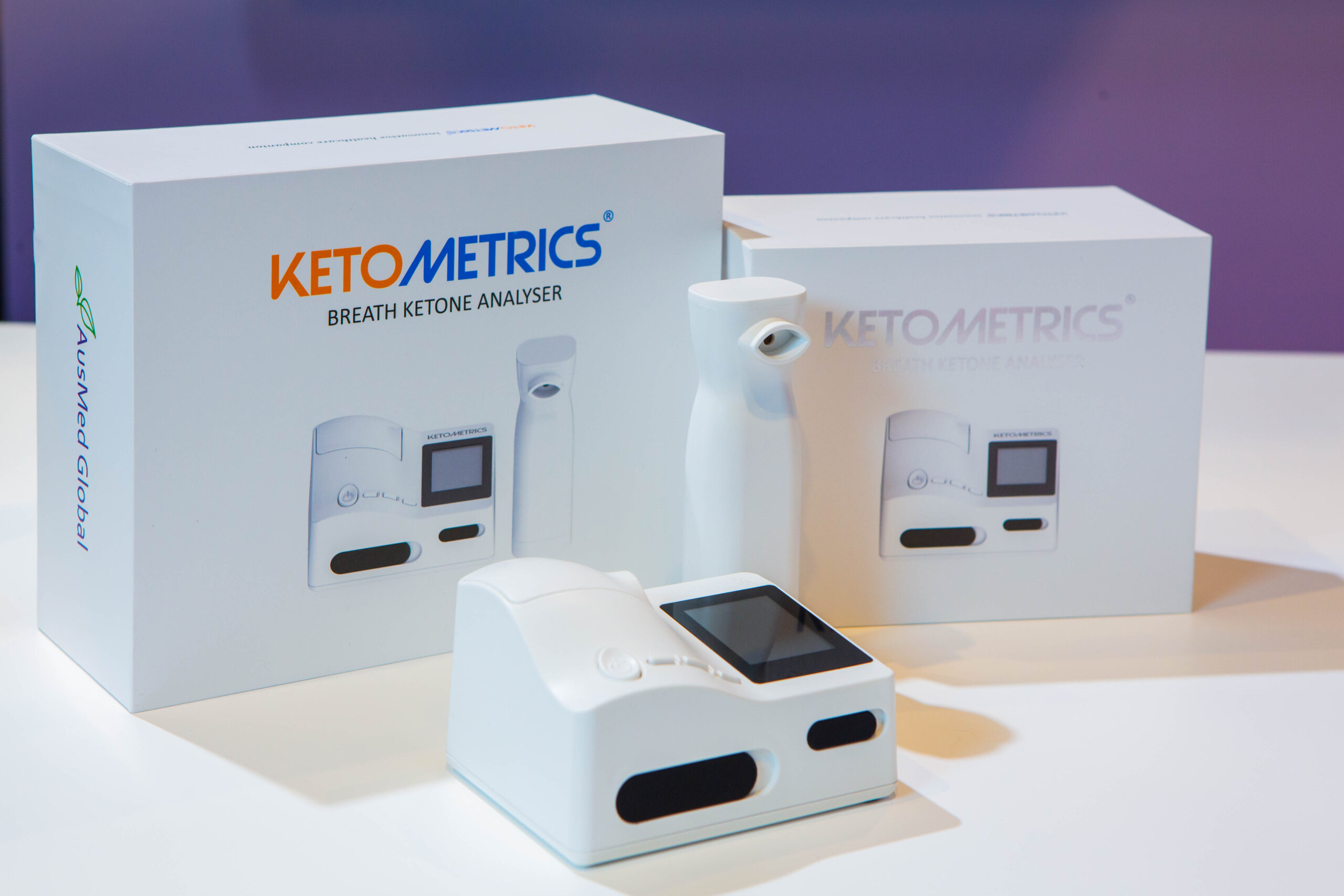 The KetoMetrics® system, the world’s first proprietary portable breath ketone device benchmarked against gas chromatography laboratory testing, operates in three steps. It is designed for rapid DKA and EDKA screening as a non-invasive alternative to traditional methods. By lowering the practical and psychological barriers to ketone monitoring, the approach supports a shift in how diabetes care is framed: not as reactive crisis management, but as proactive metabolic safety.
This is particularly important during sick-day management, the periods when infection, reduced oral intake, or physiological stress increase DKA risk substantially. Knowing that a simple, painless breath check is available changes the calculus for patients deciding whether to monitor. It also changes what is possible for remote care, home monitoring, and hospital-at-home models.
“As a healthcare researcher, my responsibility is to safeguard the quality and fidelity of every community study we conduct,” said Professor Queenie Law, Associate Professor, School of Nursing and Health Sciences, Hong Kong Metropolitan University. “Collaborating with AusMed has led our way to successful incorporation of breath ketone as a key marker and non-invasive method for monitoring DKA in community studies. By holding our science to the highest standard, we can provide an alternative way of protection to vulnerable older adults in Hong Kong and aging societies worldwide.”
Implications for Care Systems
The cohort studied in Hong Kong is not exceptional. Elderly adults with Type 2 diabetes, uncertain metabolic control, and limited awareness of ketoacidosis exist in every aging society. The specific findings, awareness gaps, symptom non-disclosure, preference for non-invasive testing, are likely to recur wherever similar research is conducted.
This matters at the system level as much as at the individual level. Earlier identification of metabolic deterioration reduces the likelihood of delayed presentation. Delayed presentation is expensive: in the United States, total hospital charges attributable to DKA patients reached approximately $6.76 billion in 2017, with mean charges of around $30,836 per admission. Much of this cost reflects presentations that arrived too late for simple intervention.
Community centers and caregivers, better equipped with practical monitoring tools and improved awareness, can support earlier communication when symptoms appear. The insights from the Hong Kong cohort are already informing a scalable model intended for other aging societies facing similar structural challenges.
What is needed is not a new understanding of DKA’s biochemistry. What is needed is a monitoring habit, one that is easy enough, painless enough, and well enough understood that it actually becomes routine. For elderly diabetes patients navigating a condition that can turn quietly dangerous, that habit may be the difference between early intervention and a preventable emergency.


