
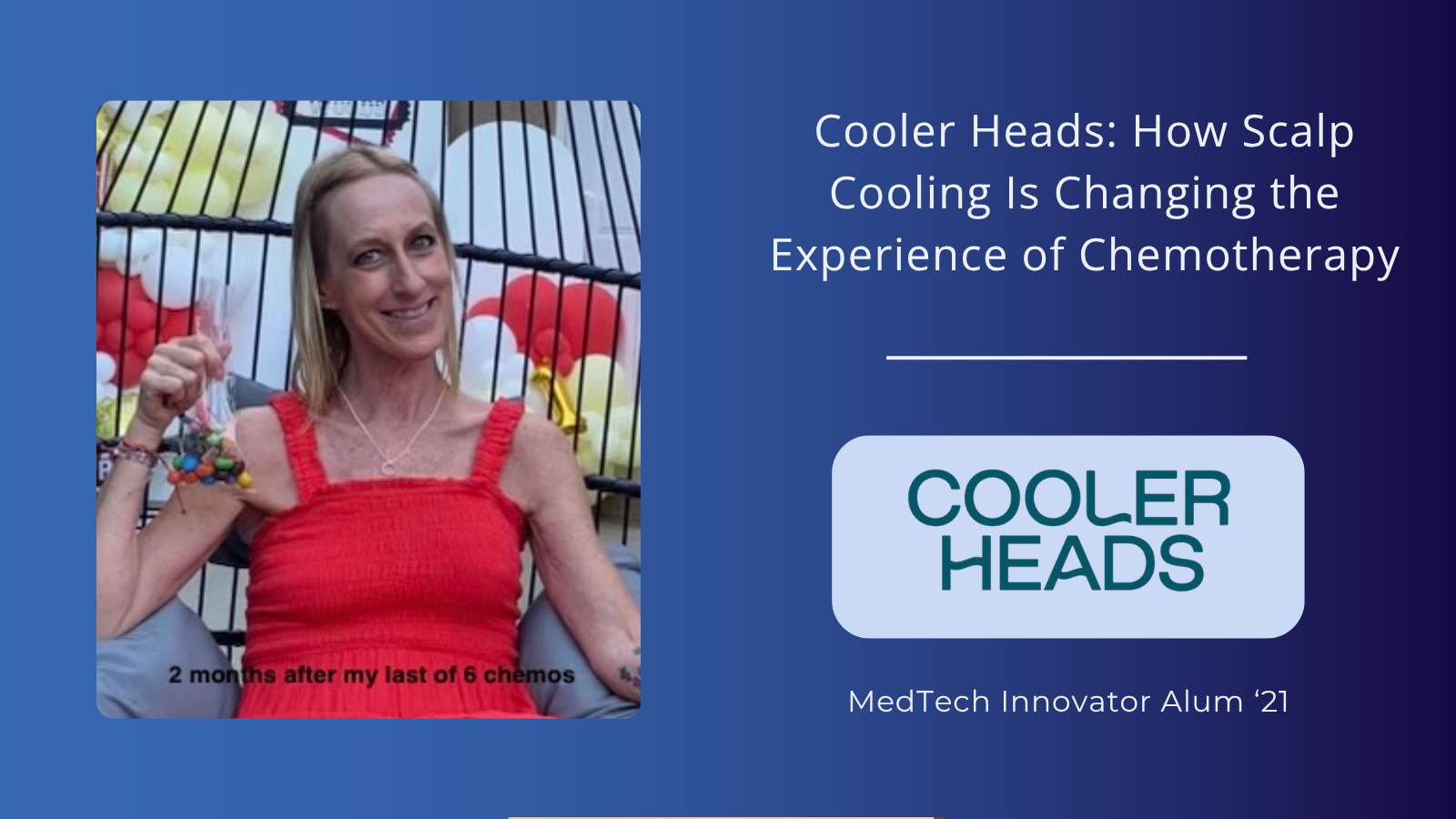
Cooler Heads: How Scalp Cooling Is Changing the Experience of Chemotherapy
At MedTech Innovator we empower healthtech companies to bring groundbreaking solutions to patients in need. Our Patient Stories series highlights the real-world clinical impact of the companies we support—showcasing how their technologies are transforming patient care, improving outcomes, and advancing healthcare. Cooler Heads was a participant in the 2021 MedTech Innovator cohort.
When someone receives a cancer diagnosis, the conversation quickly turns to treatment: chemotherapy protocols, dosing schedules, prognosis. But another concern often surfaces just as quickly: Will I lose my hair? For many patients, the answer carries a weight that goes far beyond appearance.
Chemotherapy-induced alopecia (CIA) is not merely a cosmetic concern. Research consistently shows that hair loss ranks among the most emotionally challenging side effects of cancer treatment. It is a visible, public marker of illness that strips away privacy, autonomy, and a sense of normalcy at a time when patients already feel profoundly vulnerable. Studies indicate that 8% of chemotherapy patients have refused or delayed treatment specifically because of the anticipated impact of hair loss. For patients undergoing taxane- and anthracycline-based regimens, such as the TCHP protocol commonly used in breast cancer treatment, near-complete hair loss is almost certain without intervention.
Scalp cooling: a proven tool, newly reimagined
Scalp cooling works by reducing blood flow and cellular metabolism in hair follicles during infusion, limiting follicle exposure to cytotoxic agents. The technology has been used for decades in various forms, and evidence for its effectiveness in reducing CIA continues to grow.
Yet many existing systems carry significant limitations. Conventional scalp cooling devices are large, stationary, and operationally demanding, creating workflow strain on infusion center staff and offering little flexibility for patients who may already be navigating long, difficult treatment days.
Compact, portable, and built around the patient

Captured by Fotility Photography & Videography
Amma is a next-generation scalp cooling system designed with both patients and care teams in mind. Unlike bulkier predecessors, Amma is compact and portable, allowing for greater comfort and flexibility during infusion without placing unnecessary operational burden on nursing staff.
Amma is U.S.-based and backed by a dedicated customer service team led by oncology nurses, a meaningful distinction in a category where clinical questions arise frequently. That specialist support extends to both patients and providers, ensuring that everyone in the care equation has access to informed, experienced guidance.
Amma is changing scalp cooling from a ‘nice to have’ to a ‘must have’ for cancer centers across the country. More than 70% of our accounts adopted scalp cooling specifically because Amma integrates seamlessly into existing workflows without disrupting patient scheduling. It has been incredibly encouraging to see adoption continue to grow, especially following the implementation of Category I CPT codes in January, which has improved the reimbursement landscape.” — Kate Dilligan, CEO & Founder, Cooler Heads
One patient’s story: reclaiming control during treatment
In November 2022, the 48-year-old patient found a lump in her left breast, just eight months after a normal mammogram. Trusting her instincts, she contacted her primary care doctor immediately. After a mammogram, ultrasound, and biopsy, she was diagnosed with Triple Positive (ER+/PR+/HER2+) Invasive Ductal Carcinoma, Stage 2B on December 15, 2022. She learned the news through her online patient portal before her care team had the chance to call.
Because her cancer was HER2 positive, she needed to begin aggressive treatment quickly. Her first TCHP infusion was scheduled for January 23, 2023, only five weeks after diagnosis. She was deeply worried about losing her hair, not out of vanity, but because she wanted to continue working and maintain some privacy. Hair loss, she knew, would make her diagnosis visible in every meeting and interaction, removing her ability to decide when and how to share her own story.
Late one night while researching her diagnosis, she came across an article about scalp cooling and Cooler Heads. She reached out at 2 a.m. By the next morning, Kate Dilligan, CEO and founder of Cooler Heads and a fellow breast cancer survivor who had been treated at the same hospital, had already responded and was helping arrange an Amma unit for her treatment.
Support when it mattered most
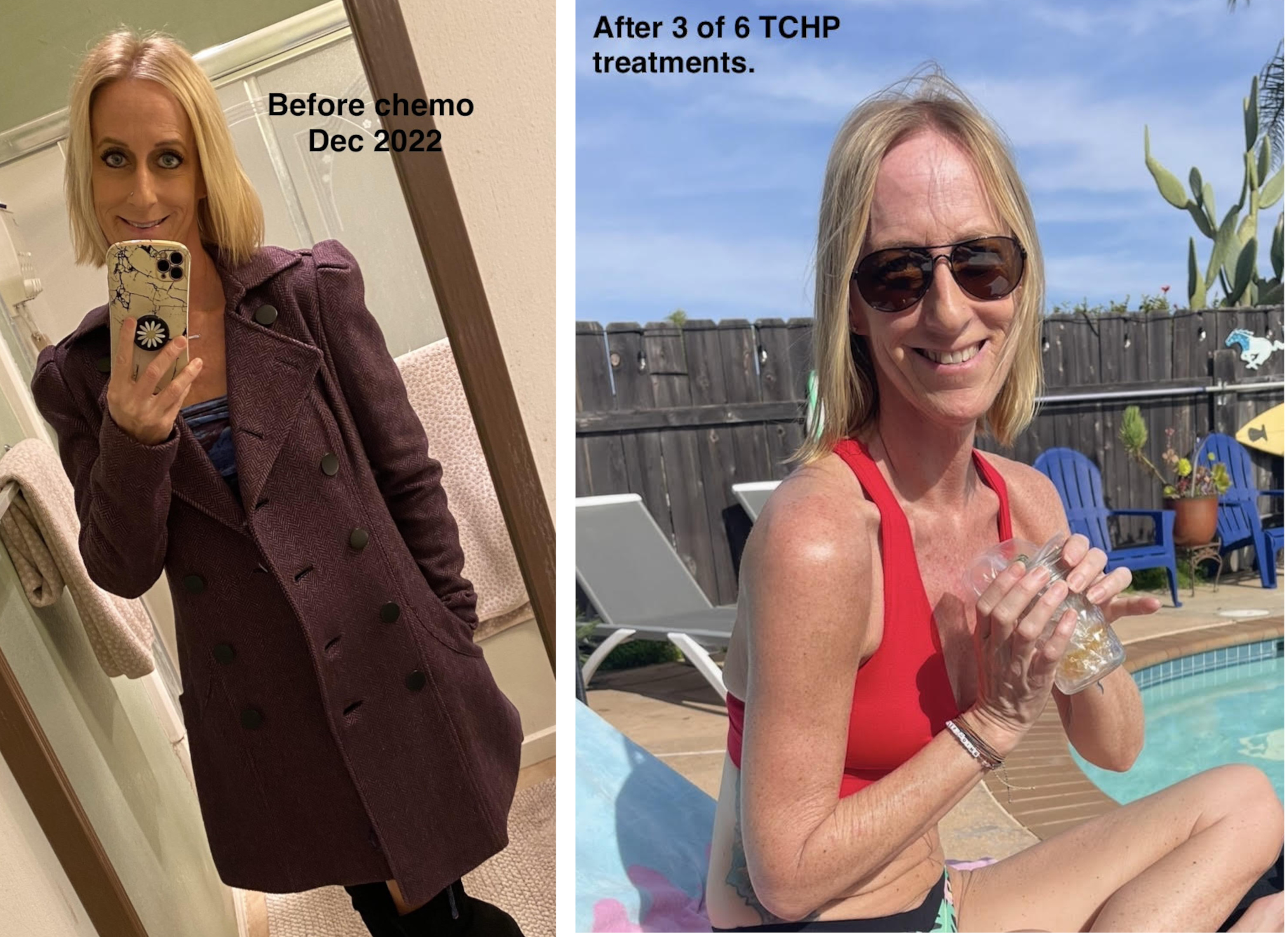
Before her first infusion, the patient was set up with Amma. Scalp cooling works by lowering scalp temperature before, during, and after chemotherapy, reducing blood flow to the follicles and limiting the amount of chemotherapy drugs that reach them. She used the Amma device throughout all six of her TCHP cycles.
After her second cycle, she noticed increased shedding and began to worry the treatment wasn’t working. She reached out to Julia from the Cooler Heads customer care team and shared photos of her hair loss. Julia explained that some shedding is normal during scalp cooling, and reminded her that without the device, she likely would have already lost all of her hair. That real-time, clinically informed reassurance gave her the confidence to continue. She later described it as “the best experience I had during a really horrible time.”
For this patient, scalp cooling represented something larger than hair preservation. It was a more holistic approach to cancer care, one that considered the whole person, not just the treatment. The combination of Amma’s technology and the personalized support of the Cooler Heads team helped her navigate both the physical and emotional dimensions of chemotherapy-related hair loss.
A sense of normalcy and a healthy head of hair
Throughout her six cycles of TCHP, the patient retained a meaningful portion of her hair volume. To strangers, her hair loss was not noticeable. No colleague or acquaintance could tell she was undergoing chemotherapy based on her appearance, allowing her to continue in a public-facing, client-focused role without cancer defining every interaction or forcing disclosure before she was ready.
After completing chemotherapy, she underwent a mastectomy and was declared NED, No Evidence of Disease. Radiation was not required. She transitioned to maintenance immunotherapy every three weeks for a year and is currently in medical menopause while taking tamoxifen. Her hair stylist of 17 years has noted that her hair is now healthier and thicker than it had been in over a decade. She says, “Scalp cooling gave me something I had control over during one of the hardest periods of my life.”
For patients at the growing number of cancer centers adopting Amma, scalp cooling provides more than hair retention. It helps preserve identity, normalcy, and agency during treatment. In a landscape where so much is taken from patients, the ability to choose when and with whom to share a diagnosis is no small thing.


