
2026 Webinar Series

Join our guest experts for discussion and strategic insights in the medical devices, digital and diagnostic space
About
Webinars are one hour in length and are live-streamed on our YouTube Channel. They will also be recorded and available for later viewing.
The goal of the MedTech Innovator webinars is to provide the medtech ecosystem and our portfolio companies with feedback from experts and professionals in areas that are specific to the strategic needs outlined in our discussions and surveys. Strategic areas to be covered include: intellectual property, product development, commercialization, reimbursement, healthcare economics, regulatory strategy, clinical trial design and execution, and fundraising.
Our webinars are administered virtually and consist of one or more panelists addressing key questions supplied in advance by the MedTech Innovator Accelerator & Showcase companies, as well as a general discussion on the topic within the context of the evolving healthcare ecosystem.
Upcoming Webinars
The Road to Revenue: Managing your Product End-to-End from Supply Chain to Manufacturing to Distribution
September 17, 2026 | 9 AM PT
Getting a medtech product cleared is a challenging road on its own, but getting it built, priced, stocked, sold, and actually into customers’ hands creates new obstacles on the path to successful adoption. In The Road to Revenue, we’ll follow the product journey end-to-end, tackling the decisions that can make or break a launch, from manufacturing and supply-chain strategy to pricing, distribution, GPOs, and health-system adoption. We’ll dig into the messy real-world questions: Should you build a sales force or use distributors? Who holds the inventory? When is a GPO worth it? And how do you turn that exciting first pilot into repeatable, scalable revenue? Whether you’re mere months from launch or still figuring out how your product will get from the factory floor to the hospital floor, this session will help you build a commercialization engine that’s ready to go the distance.
Adam Steadman, CEO of MDD Options, brings extensive experience in medical devices, healthcare distribution, clinical-study support, and market development. Through his leadership of MDD Options, he helps manufacturers evaluate opportunities, navigate complex distribution requirements, and build flexible pathways into commercial, institutional, and federal healthcare markets.
His practical, solutions-focused approach is centered on giving healthcare companies greater optionality while helping innovative products move from development and market authorization toward successful commercialization and long-term growth.
Jennifer Ernst is CEO of Reach Neuro, where she is leading the company’s spin-out from the University of Pittsburgh and Carnegie Mellon. Previously, she was CEO and co-founder of Tivic Health, where she founded and IPO-ed the company, launched a home-use neuromodulation device, secured FDA clearance and CE Mark, and led its pivot into a vertically integrated biologics company. Earlier, she served as Chief Strategy Officer and CEO of the U.S. subsidiary of Thin Film Electronics ASA, helping grow the company from an eight-person R&D team to a $480 million public company. She began her career at Xerox PARC, working in business development and commercializing breakthrough research.
Sanaz Bahadory-Imani is Executive Director, Supply Chain & Operational Excellence, at KARL STORZ North America, with more than 20 years of experience in supply chain and operations across established corporate environments and fast-paced startups. Her expertise includes procurement, inventory management, quality, logistics, and lean and continuous improvement. She studied at HU University of Applied Sciences Utrecht (Hogeschool Utrecht).
Suzy Engwall is Senior Director of Global Business Development & Strategic Growth at PRIA Healthcare, supporting medtech innovators with full-spectrum commercialization services including regulatory, reimbursement and market access. She has been in healthcare for over two decades, with experience building innovation programs, evaluating new technology, and bringing products to market.
Seats at the Table: Building a Board That Works
September 24, 2026 | 9 AM PT
Behind every startup that scales well is a board that actually works, and the founders who build one well rarely learned it from a textbook. In this joint MedTech Innovator and BioTools Innovator webinar, a panel of founders and operators who have built their own advisory boards and boards of directors, and who now hold multiple board seats themselves, share what actually works from both sides of the table. Spanning company-building, commercial leadership, and healthcare governance and law, they will cover how to build a credible board and advisory board from the ground up, how to find and recruit heavy-hitter independent directors beyond your own network, and how to keep members engaged as true partners aligned to your strategic goals. They will also dig into governance best practices at each stage of growth, handling conflicts of interest and the incentives of industry-affiliated members, how CEOs can get the most from their board without losing control of strategic direction, and what a board should do when the company faces a financing crunch, a regulatory setback, or a product failure. Whether you are forming your first board or reshaping one ahead of your next raise, you will leave with practical, lived guidance for building a board that adds skills, credibility, and steady judgment when it matters most.
Jim is an engineer turned entrepreneur. With a master’s in both Biomedical Engineering Product Development and Entrepreneurship, he blends the business with the technical. Jim previously worked in life sciences and medical devices helping to bring new products to market. He served as Co-Founder and CEO of his most recent company, Clara Biotech, which was founded in 2018 and was acquired by Innovaprep in the summer of 2023.
Caroline Popper is a business-person, clinician, and attorney. She has decades of experience in the healthcare industry in operating and advisory roles in public and private companies. She has been the founding CEO of four life science tools and diagnostics companies. She has a deep interest in the integration of AI into healthcare and other sectors, in privacy, validation, credentialing, governance and other legal issues associated with AI use and in commercialization of data. She received her medical degree from the University of the Witwatersrand (South Africa) and her MPH from Johns Hopkins where she completed her residencies in internal medicine and in pathology. She received her J.D. at American University (D.C.). and is a member of the Maryland Bar. She is Chair of the American Bar Association Health Law AI Task Force, and member of the Risk and Trust sub-committee.
Ken Nelson is a commercial pioneer in the field of cardiac digital health and remote patient monitoring, and has led commercial efforts for disruptive technologies in the digital health, wearables, and cardiac remote patient monitoring industries. He has built and led the teams and cultures that launched all of the disruptive patch monitors for 3 of the top 4 market share players in cardiac digital health and remote patient monitoring, including #1 (BioTelemetry as Global VP of Sales), #2 (iRhythm as VP of Sales & Marketing), and #4 (Bardy Diagnostics as Chief Commercial Officer).
Overall, he is a 25-year digital health, medical device, and remote patient monitoring executive and innovator with successful senior leadership experience ranging from a Fortune 500 company (Guidant / Boston Scientific) to a #1 market share leading medium-sized company (BioTelemetry, acquisition by Philips for $2.8 billion announced in December ’20) to 3 start-ups, 1 of which eventually led to an extremely successful IPO (iRhythm) and another which was acquired by HillRom/Baxter (Bardy Diagnostics) in August 2021 for $400+ million after milestone payments. He also previously served as Head of Digital Health, Diagnostics, and Monitoring for Biotronik, a leading cardiac digital health and implantable medical device company.
Ken currently serves as partner and founder of Nelson Jennings Ventures (www.nelsonjenningsventures.com), where he collaborates closely with MedTech Innovator (www.medtechinnovator.org), the largest MedTech and Digital Health startup accelerator globally, as both a judge and mentor. He is also a Venture Partner and LP Investor for Star51 Capital. In addition, he serves as an active Board of Directors member for HeartBeam (NASDAQ: BEAT), Echo IQ (Sydney, Australia – Ticker ASX: EIQ), Acarix (Stockholm, Sweden NASDAQ: ACARIX), Epitel (Salt Lake City, UT), and Happitech (Amsterdam, Netherlands), and on the Strategic Advisory Boards of a handful of other disruptive cardiac Digital Health and MedTech startups.
He is also on the advisory boards and/or planning committees of HeartX (MedAxiom/ACC), HRX (Digital Health Summit of Heart Rhythm Society), the Innovation Advisory Board of Heart Rhythm Society (HRS), and both the AHA Health Tech Innovation Business Advisory Board and the Heart & Brain Startup Accelerator Selection Committee of the American Heart Association and MedTech Innovator.
Ken earned a B.A. in Economics from Vanderbilt University, is a graduate of Phillips Exeter Academy, and resides in Dallas, TX with his wife and 3 children.
Upma Sharma, Ph.D., is a leader in biomaterials innovation, driving Arsenal Medical’s platform from concept to clinic, securing FDA breakthrough device designation and IDE approval for ResQFoam™, initiating a First-in-Human study with NeoCast™, and securing over $65M in non-dilutive funding from partners including DARPA, NIH, and the Department of Defense.
Upma joined Arsenal as a research scientist and now serves as the company’s CEO, leading the strategic expansion of its biomaterials platform across high-value clinical indications. Prior to Arsenal, she contributed to the development of a bioresorbable scaffold at Lyra Therapeutics, leading a Phase I study that contributed to the company’s IPO.
Upma earned her Ph.D. in Chemical Engineering from Princeton University and B.S.E. from Purdue University, completed postdoctoral research in Bioengineering at Rice University, and is an author of 20+ publications and inventor on over 40 patents worldwide.
Anne is a founder and COO of RealSeq Biosciences, a company dedicated to advancing RNA fragmentomics to diagnose disease. She is an experienced COO within the biotechnology industry skilled in Marketing, Business Development, Strategic Partnerships, and Consulting. Anne has experience in general management at small start-ups to large diagnostics companies including Becton Dickinson. Anne has Master of Business Administration focused in Marketing/Marketing Management from Santa Clara University.
Webinar Recordings
Lights, Camera, Traction! Turning Your Innovation into a 1-Minute Video
June 10, 2026 | 9 AM PT
By invitation only
A great 1-minute video can do more than showcase your technology– it can capture attention, tell a compelling story, and open doors to investors, partners, customers, and future champions of your innovation. But how do you distill a complex medtech or biotools solution into just 60 seconds? Join MedTech Innovator and BioTools Innovator for an interactive discussion with past Best Video Award winners and expert communications strategist Valeria McFarren as they share practical tips for creating videos that are clear, engaging, and impactful. Learn how to identify the key message, structure a compelling narrative, showcase your product effectively, and avoid common mistakes that can cause viewers to tune out.
Brian Feng is the CEO and Co-Founder of Osem Fluidics, a biotechnology startup focused on simplifying nanoparticle and lipid nanoparticle (LNP) assembly through innovative centrifugal microfluidics technology. With a Ph.D. in Materials Science from the University of Southern California, Brian combines deep technical expertise with entrepreneurial leadership to develop accessible tools that accelerate research in nanomedicine and genetic medicine. Under his leadership, Osem Fluidics has earned recognition from leading innovation programs and startup competitions, advancing solutions that make high-quality nanoparticle formulation faster, simpler, and more scalable for life science researchers.
Neal Piper is the Founder and CEO of Luminoah, a MedTech company making enteral nutrition delivery simpler, smarter, and easier for everyone.
Before founding Luminoah, Neal spent his career advancing healthcare in the U.S., Asia, and Africa. He began his career in Pfizer’s Neuroscience Division and later served as President of the Global Health Fellows Alumni Business Network. Neal also worked in Pfizer’s Emerging Markets Division and led the expansion of healthcare programs across 18 countries at Population Services International.
Neal has founded multiple ventures, including a home healthcare company and a nonprofit organization. Driven by a mission to improve healthcare through technology, he is committed to creating meaningful change that improves lives.
Valeria McFarren is the founder and president of Chaski Global, a strategic communications and creative agency built on a simple premise: the right story, told well, changes everything.
Over more than two decades, Valeria has worked at the crossroads of global health, medical technology, nonprofit communications, and social impact — advising organizations that are doing important work and need the world to know it. Her clients include med tech innovators like Luminoah, Luna Labs, and Trivoca Health; community health anchors like CvilleBioHub; and a wide portfolio of nonprofits, foundations, and mission-driven enterprises across four continents.
She is a strategist, a storyteller, and a builder. At Chaski, she leads brand strategy, narrative development, campaign design, and communications consulting for organizations at critical inflection points. This includes launches, rebrands, funding rounds, and growth phases where the stakes are high and the message has to land.
Beyond client work, Valeria is a connector and community builder. She co-founded The She Lab, a women’s leadership and empowerment network, and serves on the boards of Data Friendly Space, Yellow Door Foundation, and the Tanga Tanga Foundation in Bolivia. She brings that same cross-sector fluency to her speaking by addressing audiences on strategic communications, brand-building for impact, and the power of narrative in driving growth.
Her work has taken her across Asia, Africa, Latin America, and Europe, supporting everything from nationwide energy projects to childhood cancer awareness campaigns to medical technology launches. That breadth is the source of her edge. She sees patterns across sectors that specialists miss, and brings that perspective to every engagement.
Peer Power: Solving Startup Challenges in Leadership Pods
June 18, 2026 | 9 AM PT
By invitation only
This webinar will officially launch the Leadership Pods program, a peer support initiative designed to connect fellow CEOs in a trusted, collaborative setting. Leadership Pods, comprised of 5-6 CEOs each, will serve as a dedicated space to share challenges, celebrate wins, and exchange knowledge and connections. You will learn from an alumni pod that is still meeting 2 years later, and the last half of the webinar period will be designated as time for your first Leadership Pod meeting in breakout rooms.
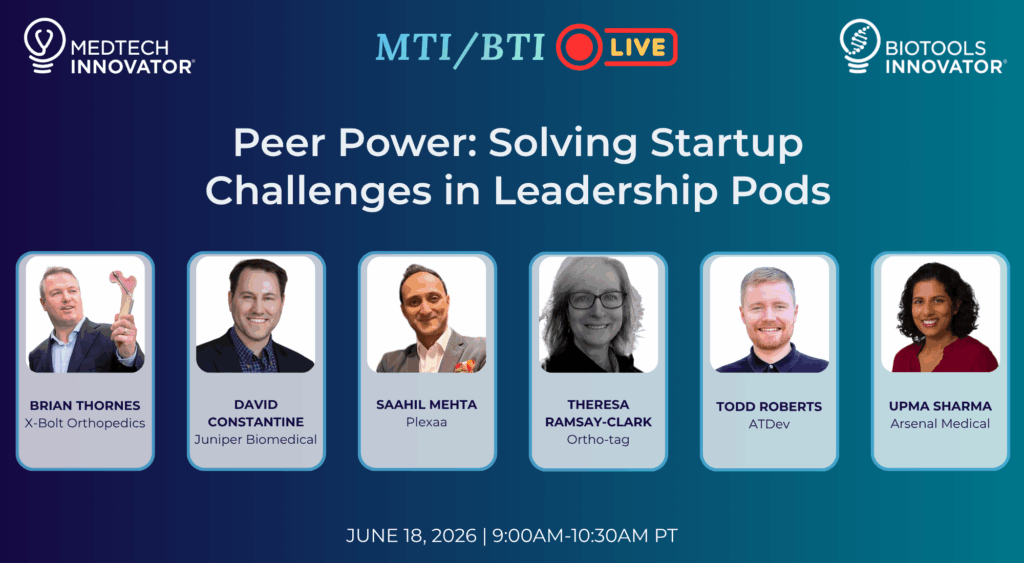
Brian is an accomplished orthopedic surgeon renowned for his groundbreaking innovations in the field. He is best known for inventing the original TightRope, an advanced ankle stabilization device he developed during his orthopedic residency. Licensed to Arthrex Inc. in 2003, the TightRope has become a standard in orthopedic care, with one being implanted every 12 minutes globally.
Recently, Brian has made significant strides in hip fracture treatment with the invention of the X-Bolt hip fracture system. His leadership in its development included overseeing the world’s largest randomized controlled trial, which demonstrated X-Bolt’s superior performance compared to other systems. Following FDA clearance in 2023, Brian managed the U.S. commercialization of the X-Bolt Pro-X1 trochanteric nailing system in 2024. He is now focused on expanding this innovation into a comprehensive nailing portfolio for hip fractures, distal femur, spine, and humerus, with continued development through 2026.
Brian graduated from Trinity College Dublin in 1994 and holds a Master’s in Surgery, a Fellowship of the Royal College of Surgeons in Ireland (1998), and an MBA from Trinity College Dublin (2006).
David N Constantine is the Co-Founder and CEO of Juniper Biomedical, a Worcester, Massachusetts-based company developing precision neuromodulation therapies for pelvic health conditions, including urinary and fecal incontinence, pelvic pain, and sexual dysfunction. Under his leadership, Juniper Biomedical won all three phases of the NIH SPARC Neuromod Prize — including a $1.6 million Phase 3 award — and was named a 2024 MedTech Innovator Grand Prize Finalist. With a career spanning R&D roles at large medical device companies before founding Juniper in 2019, David also serves on the board of Pioneer Neurotech and as an advisor to SeaAhead, and has previously held board and advisory roles at NerveSolutions and Pilleve. He holds a BS in Biomedical Engineering and Russian Language from Trinity College.
Dr Saahil Mehta is the Founder of Plexāā, the London-based medtech company behind BLOOM⁴³, a pre-operative care platform that combines a wearable preconditioning device with digital prehabilitation support to help patients prepare physically and psychologically for breast surgery. A Consultant Plastic Surgeon with over a decade of experience in the NHS, including fellowships at The Royal Marsden and The Cadogan Clinic, he founded Plexāā in 2020 to address the under-supported pre-operative phase of the surgical journey. Dr Mehta holds an MBBS from Newcastle University and an MD from the University of Basel.
Theresa Ramsay-Clark is the Chief Operating Officer of Ortho-tag, Inc., a medical device company developing patented in-body communication and diagnostic nanosensor technology designed to provide early warning of infection near orthopaedic implants, a condition (prosthetic joint infection) that contributes to over 18,000 deaths annually. Since joining Ortho-tag in 2019, she has driven the company’s strategy, operations, and capitalization efforts across its multi-generation product platform, from secure in-body data storage to implanted pH nanosensors, and guided the company through the 2024 MedTech Innovator Accelerator cohort. Her background spans more than two decades of executive leadership and business development, including directing DoD telecommunications contracts at SNR Systems and SAIC, serving as Director of Special Projects at the National Sheriffs’ Association, and running her own consultancy, Ramsay-Clark Associates, advising small businesses on strategy, operations, and financial planning. She studied at The Johns Hopkins University.
Todd Roberts is the CEO and Co-founder of ATDev (Assistive Technology Development, Inc.), a Pittsburgh-based startup building the next generation of robotic mobility and assistive technology. Founded in 2020 with key stakeholders from UC Berkeley, Stanford Medicine, and UCSF, ATDev is the company behind Reflex, an FDA-registered wearable robotic brace that helps people rebuild strength from home, and is a partner in RAMMP, a $41 million ARPA-H initiative developing a robotic assistive mobility and manipulation platform. Todd co-founded the company with Owen Kent, whom he met as a housemate at UC Berkeley, pairing his engineering expertise with Owen’s lived experience as a lifelong wheelchair user. A graduate of the Berkeley SkyDeck accelerator, MassRobotics Healthcare Catalyst, and the 2024 MedTech Innovator cohort, Todd holds an MEng in Mechanical Engineering from UC Berkeley.
Upma Sharma has dedicated her career to transforming medicine with materials. Under her leadership, Arsenal Medical has established its platform of biomaterials, achieved FDA breakthrough device status and IDE approval for ResQFoam™, completed a First-in-Human clinical study with NeoCast™ and secured over $65M of non-dilutive funding from a diverse group of partners, including the Department of Defense, DARPA, NIH (both National Cancer Institute and National Heart, Lung, and Blood Institute), and Massachusetts Life Sciences Center.
Upma joined the company as a research scientist, and her role quickly expanded. She led Arsenal’s ResQFoam foundational program from concept to the clinic, guiding product development, GMP contract manufacturing, the regulatory process through IDE approval, and clinical trial design. Today, Upma leads the expansion of Arsenal’s biomaterial platform for strategic growth across high-value clinical indications.
Prior to joining Arsenal, Upma was a key member of the Lyra Therapeutics team that created a novel bioresorbable scaffold. She oversaw the development of this technology for the treatment of chronic sinusitis, including leading a Phase I clinical study. The data from that study led to subsequent venture funding and the eventual IPO of Lyra Therapeutics.
Upma earned a Ph.D. from Princeton University in Chemical Engineering and a B.S.E. from Purdue University. During a post-doctoral fellowship in Bioengineering at Rice University, she was awarded a NIH Training Grant in Nanobiology. Upma has authored more than 20 peer-reviewed scientific publications and is an inventor on more than 40 issued or pending patents worldwide, including 20 US issued patents.
Thinking Like a Payer: A MedTech Startup Playbook to Reimbursement Strategy
June 25, 2026 | 9 AM PT
For many medtech startups, reimbursement is treated as a late-stage challenge, but payers begin evaluating value long before a product reaches the market. Join experts from a variety of payer perspectives for a discussion on how public and private payers assess new technologies, make coverage decisions, and determine whether innovations are worth adopting. Learn how successful companies align clinical evidence, health economics, coding, payment pathways, and stakeholder engagement strategies early in development to improve their chances of reimbursement and market access success. The panel will explore CPT, HCPCS, DRG, and APC pathways, evidence expectations, and practical approaches for engaging payers before commercialization. Whether you’re pursuing Medicare, Medicaid, or commercial coverage, this session will help you understand what payers are looking for and how to build your strategy accordingly.
Nicole is the Program Director for MedTech Innovator. Nicole grew up in Michigan before attending Boston University to study Biomedical Engineering as Trustee Scholar. In 2020, Nicole completed her PhD at Harvard University, working on interdisciplinary medtech projects between the Wyss Institute for Biologically Inspired Engineering and Mass Eye and Ear hospital. After graduating, Nicole launched a startup company, Beacon Bio, based on her PhD work as a Gliklich Healthcare Innovation Scholar. Following Beacon Bio’s acquisition by Desktop Metal, Nicole served as the Vice President of Biofabrication in their Desktop Health division. Nicole’s accolades include the Collegiate Inventors Competition Graduate Winner (2018), the Baxter Young Investigator Award (2020), the Lemelson-MIT Student Prize (2021), and the MIT Technology Review Innovators Under 35 (2023).
Brian Waldersen is the Director of the Division of Specialty Payment Models at the Center for Medicare and Medicaid Innovation (CMMI), where he has spent nearly a decade shaping federal healthcare payment policy. A physician by training, he earned his M.D. from The Johns Hopkins University School of Medicine and a Master of Public Health in Health Policy from the Johns Hopkins Bloomberg School of Public Health, giving him a strong foundation at the intersection of clinical medicine and health systems. In his current role, which he has held since 2021, Brian leads the design and implementation of specialty care payment models aimed at improving quality and reducing costs across the Medicare and Medicaid programs. His career at CMMI has spanned roles from Social Science Research Analyst to Deputy Director before ascending to his current position, reflecting a deep and sustained commitment to value-based care reform.
Lee Fleisher, MD, ML, is co-founder and CEO of Rubrum Advising and a nationally recognized healthcare leader whose work bridges clinical practice, health policy, and the adoption of innovative care models.
From 2020 to 2023, Lee served as Chief Medical Officer and Director of the Center for Clinical Standards and Quality (CCSQ) at the Centers for Medicare & Medicaid Services (CMS). Before joining CMS, he was Chair of Anesthesiology and Critical Care at the University of Pennsylvania, where he remains Professor Emeritus and a practicing anesthesiologist.
At CMS, Lee was responsible for national clinical, quality, and safety standards for healthcare facilities and providers, as well as Medicare coverage determinations for items and services that improve health outcomes. As a member of the CMS and HHS executive leadership team, he helped shape federal responses to public health emergencies, including COVID-19 and MPOX, and worked closely with clinical, regulatory, and operational leaders across the healthcare system.
Lee is a member of the National Academy of Medicine and the Health Information Technology Advisory Committee (HITAC). He serves as a senior advisor and visiting fellow at leading health policy centers, including the Duke Margolis Institute for Health Policy, the Bipartisan Policy Center, and the Milken Institute FasterCures.
Jo Carol Hiatt, MD, MBA, FACS served as Vice President, Health Economics and Patient Value (HEPV), at the Medical Device Innovation Consortium from October 2020 through October 2022 where she collaborated closely with CMS and FDA. She previously led technology assessment and clinical teams selecting technologies for Kaiser Permanente. She is a general surgeon.
Show Me the Value: The Economics Behind Adoption
July 23, 2026 | 9 AM PT
Health economics and outcomes research (HEOR) is no longer just a reimbursement exercise; it is increasingly the foundation for adoption decisions by health systems, strategic acquirers, payers, and value-based care organizations. Join our discussion on how medtech startups can build compelling economic value propositions, develop credible cost-effectiveness and budget impact models, and generate the evidence needed to influence purchasing and coverage decisions. The panel will explore how different stakeholders evaluate value, including hospitals, integrated delivery networks, Medicare Advantage plans, and strategic industry partners, as well as how startups can navigate self-pay, value-based contracting, and emerging payment models while scaling toward broader coverage. Attendees will learn practical approaches for prioritizing health economic endpoints, building real-world evidence strategies, and translating clinical outcomes into measurable financial value that drives adoption and long-term commercial success.
Nicole is the Program Director for MedTech Innovator. Nicole grew up in Michigan before attending Boston University to study Biomedical Engineering as Trustee Scholar. In 2020, Nicole completed her PhD at Harvard University, working on interdisciplinary medtech projects between the Wyss Institute for Biologically Inspired Engineering and Mass Eye and Ear hospital. After graduating, Nicole launched a startup company, Beacon Bio, based on her PhD work as a Gliklich Healthcare Innovation Scholar. Following Beacon Bio’s acquisition by Desktop Metal, Nicole served as the Vice President of Biofabrication in their Desktop Health division. Nicole’s accolades include the Collegiate Inventors Competition Graduate Winner (2018), the Baxter Young Investigator Award (2020), the Lemelson-MIT Student Prize (2021), and the MIT Technology Review Innovators Under 35 (2023).
Allen Yang is a healthcare executive with more than 20 years of experience in Medicare Advantage, managed care, and healthcare economics. As Senior Vice President of Health Care Economics at Clever Care Health Plan, he brings deep expertise in value-based care, financial strategy, and population health, built through leadership roles at Health Net, Centene, and CareMore Health, where he led initiatives spanning value-based care, provider economics, and Medicare Advantage performance.
Erik Erdal is Senior Director of Health Economics and Outcomes Research (HEOR) at BD, where he has spent more than 13 years advancing the organization’s HEOR capabilities. He built and grew BD’s first corporate HEOR Center of Excellence, leading a team focused on data analytics, value insight generation, outcomes research, and customer engagement. Prior to BD, Erik was a Life Sciences Consultant at Boston Strategic Partners, advising clients across the pharmaceutical, medical device, diagnostics, and healthcare services sectors. He holds a PhD in Medicinal Chemistry from Northwestern University and a Bachelor of Science in Chemistry from Benedictine University.
Keely Scamperle is a Market Access and Reimbursement professional with over 25 years of experience developing and executing successful strategies for MedTech companies aiming to ensure patient access to their innovations. She excels at aligning business goals with the evolving healthcare landscape and leading cross-functional transformations to support global market access, reimbursement, and health economics.
Melody Riley Johnson is a healthcare strategist with over 20 years of experience in strategy, population and value-based care, health policy, and organizational transformation. Throughout her career, she has focused on improving patient access, advancing health equity, and optimizing care delivery models across diverse healthcare systems. She has partnered with stakeholders ranging from practitioners to policymakers to design and implement scalable, patient-centered interventions, and is recognized for leading cross-functional teams, driving strategic initiatives, and using data-driven approaches to improve patient outcomes and organizational performance.
Capital Ready: Raising Money in a Selective Market
July 30, 2026 | 9 AM PT
What does it take to get a “yes” in today’s tough medtech funding market? This candid conversation brings together experienced investors from across the financing landscape to share how they evaluate startups, structure deals, and decide where to invest. From milestone planning and valuations to strategic investors, venture debt, due diligence, and fundraising pitfalls, you’ll gain practical advice for navigating every stage of the capital journey, from your first Seed round through growth financing.
Nicole is the Program Director for MedTech Innovator. Nicole grew up in Michigan before attending Boston University to study Biomedical Engineering as Trustee Scholar. In 2020, Nicole completed her PhD at Harvard University, working on interdisciplinary medtech projects between the Wyss Institute for Biologically Inspired Engineering and Mass Eye and Ear hospital. After graduating, Nicole launched a startup company, Beacon Bio, based on her PhD work as a Gliklich Healthcare Innovation Scholar. Following Beacon Bio’s acquisition by Desktop Metal, Nicole served as the Vice President of Biofabrication in their Desktop Health division. Nicole’s accolades include the Collegiate Inventors Competition Graduate Winner (2018), the Baxter Young Investigator Award (2020), the Lemelson-MIT Student Prize (2021), and the MIT Technology Review Innovators Under 35 (2023).
Abigail Hunter-Syed is Head of Olympus Innovation Ventures at Olympus Corporation of the Americas, where she leads strategic investments in innovative medical technology companies focused on advancing patient care. She has extensive experience in venture capital, investment management, and business strategy, having previously held leadership roles at LDV Capital and Morgan Stanley Investment Management. Abigail is passionate about supporting entrepreneurs developing breakthrough devices, diagnostics, and digital health solutions that address unmet clinical needs.
As the founder and CEO of MedTech Syndicates, Gavin Leonard leads a team of experienced investors and clinicians dedicated to vetting medical technology from a clinician’s perspective, ensuring that devices addressing genuine, unmet clinical needs reach the market. The organization aims to enhance standards of care and reduce costs for patients, clinicians, and hospitals. Gavin completed his bachelor’s degree in Medicinal Chemistry before moving to China, where he established a variety of businesses. This international experience laid a strong foundation for his later ventures. Upon returning to Ireland, Gavin shifted his focus to investing in and building companies within the MedTech and dental sectors. Drawing on his extensive background in investment and consulting, he understands the unique challenges that university spinouts and MedTech startups face when bringing innovations to market. MedTech Syndicates collaborates closely with early-stage startups, particularly those at the Seed and Series A stages, to refine their offerings, making them more appealing to investors and securing the funding needed to achieve their goals.
Susana Amorim is an Investment Director at Gilde Healthcare Partners, a venture and growth equity firm with over €3 billion in cumulative commitments. She joined Gilde over five years ago and focuses on identifying and executing investments in medtech companies across the full investment lifecycle, from due diligence and deal execution to board representation and portfolio company support. She serves on the boards of GT Medical and Okami Medical, and holds board observer seats at Mainstay Medical, Alleviant Medical, and Endovascular Engineering. Susana holds a background in biomedical engineering and is an alumna of the Stanford Biodesign Innovation Fellowship.
Petra Gorombei is an Investment Professional at Vensana Capital, where she focuses on investing in development and commercial-stage companies across the medtech sector. Prior to joining Vensana, Petra served as Clinical Evidence Director at ZOLL Medical, where she led clinical evidence generation strategies to support new product launches. She currently serves as a board observer and is engaged with several portfolio companies including Abrus Bio, Luna Diabetes, Nyra Medical, and Ventaris Surgical, among others. Petra earned a PhD in cancer research from Paris Diderot University and an Executive MBA at Duke University’s Fuqua School of Business.
Structuring the Perfect MedTech Round: SAFEs, Notes, Equity, Strategics & Venture Debt
August 6, 2026 | 9 AM PT
*By invitation only
Raising capital is about far more than finding investors– it’s about choosing the right financing strategy for your company’s next stage of growth. Join experienced medtech founders as they share practical lessons on structuring fundraising rounds, negotiating term sheets, balancing dilution with long-term control, and deciding when to use SAFEs, convertible notes, priced equity, venture debt, or strategic investment. You’ll also gain actionable insights on valuation, financial modeling, funding roadmaps, and positioning your company for future financing or acquisition discussions through an interactive panel and breakout sessions.
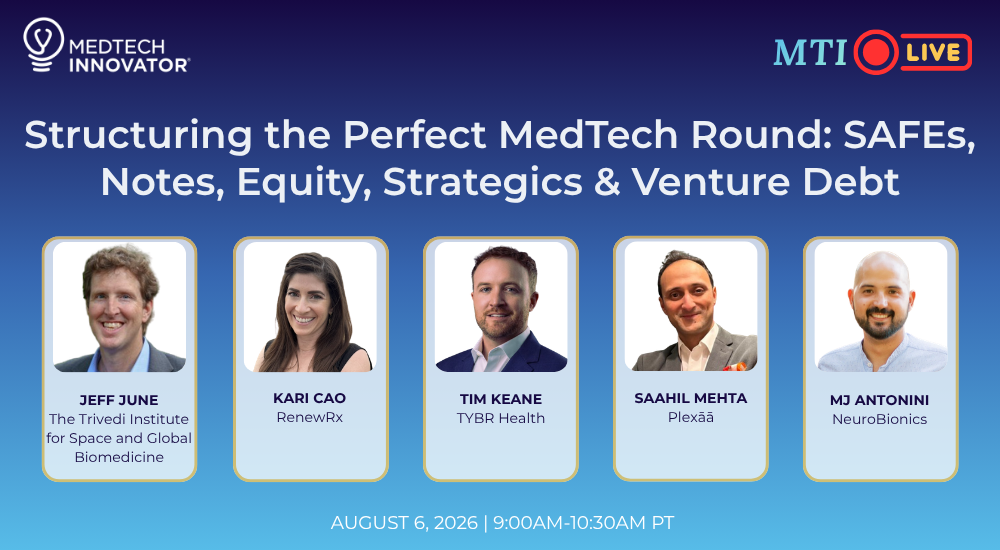
Jeff June is Chief Operating Officer of the Trivedi Institute for Space and Global Biomedicine at the University of Pittsburgh. He has worked across biomedical innovation, venture capital, academia, and technology commercialization. Recently serving as an active program leader, speaker, mentor, and advisor across the global biomedical innovation ecosystem. A multi-time founder, he has led a large multi-center clinical trial (based upon federally funded research) to translate molecular and computational approaches into data-driven tools for complex clinical workflows and decision-making in acute care settings.
Kari Cao, PA-C, MHS, NFC, is the Founder and CEO of RenewRx, a women’s health technology company focused on improving care between clinical visits. She founded RenewRx after witnessing the gap between clinical recommendations and patients’ ability to follow care plans outside the healthcare setting. RenewRx combines remote patient monitoring, behavior change, and continuous coaching to deliver personalized support, with published clinical results demonstrating improvements in maternal outcomes, including reduced C-section rates and NICU admissions. A 2025 MedTech Innovator participant and recipient of the 2025 FemTech Product of the Year award, Kari is focused on advancing women’s health from pregnancy through postpartum, cardiometabolic health, and prevention.
Tim Keane is the cofounder of TYBR Health, where he focuses on advancing biomaterials, regenerative medicine, and medical device innovation. Backed by Y Combinator and MedTech Innovator, he leverages his PhD and postdoctoral experience in bioengineering to translate complex science into innovative healthcare solutions. Keane is passionate about improving patients’ lives through science-driven innovation.
Saahil Mehta is the founder of Plexāā, creators of BLOOM⁴³, where he leads innovation to transform the surgical experience and make surgery better through technology. A 2024 Medtech Innovator Alumni, he combines his entrepreneurial vision with deep clinical expertise to bridge the gap between healthcare and innovation. His career includes specialist training in plastic surgery and a BAAPS/BAPRAS aesthetic fellowship at The Cadogan Clinic. Saahil earned his MD in Plastic Surgery from the University of Basel and his MBBS in Medicine from Newcastle University, and he remains passionate about advancing patient-centered surgical care through technology and innovation.
MJ co‑founded NeuroBionics in 2023 with Nicki Driscoll after postdoctoral work at MIT on multifunctional neural probes and translation of soft, flexible interfaces for peripheral and central neuromodulation. He holds advanced degrees in health sciences, bioengineering, and related fields and leads NeuroBionics through preclinical development and early commercialization efforts.
From Funding Opportunity to Funded Project: A Founder’s Guide to Winning Non-Dilutive Funding
August 13, 2026 | 9 AM PT
From Funding Opportunity to Funded Project brings together leaders from federal funding agencies to unpack the strategies and pitfalls of securing non-dilutive funding for MedTech and BioTools startups. Panelists will share how agencies identify, evaluate, and support high-impact innovation, while exploring the differences between major funding programs, what makes an application stand out, and how founders can identify the right opportunities for their company and technology. The discussion will also cover how to navigate shifting funding priorities, build a strategic grant portfolio, and turn individual awards into a sustainable non-dilutive funding pipeline. Attendees will gain practical insights into proposal strategy, review processes, common pitfalls, and how to align grant funding with product development and company milestones. Whether you’re preparing your first application or building on a track record of awards, this panel will help you move from funding opportunity to funded project.
Jennifer Thabet serves as the Program Director of DARPA’s SBPO, where she plays a critical role in enhancing the ability of small businesses to create and transition groundbreaking technologies for the warfighter, federal government, and commercial sectors. She administers the DARPA Small Business Innovation Research (SBIR) and Small Business Technology Transfer (STTR) programs and leads DARPAConnect, which aims to break down barriers for new performers and guide them on how to effectively engage with DARPA. Before her current role, Ms. Thabet spent over 13 years at Booz Allen Hamilton, where she managed complex government contracts and provided program and financial management support to DARPA and the DoW. Prior to her work at Booz Allen, she practiced law, specializing in contract law and litigation.
At the Biomedical Advanced Research and Development Authority (BARDA), Manbir oversees the BARDA Accelerator Network, a program designed to foster the growth of the startup ecosystem by accelerating the development and commercialization of next-generation health security solutions. Including the BioTools Innovator: Vanguard program for enabling technologies, the Network supports innovators developing solutions in all major technology areas of interest to BARDA, including, therapeutics and vaccines, diagnostics and medical devices, digital health, and medical countermeasures for pediatric populations. Additionally, Manbir oversees the BARDA Ventures program in partnership with the Global Health Investment Corporation. The Global Health Security Fund utilizes the BARDA mission framework to make equity-based investments in novel technologies to strengthen national and global health security.
Monique Pond is a Team Lead & Program Director in the National Cancer Institute (NCI) Small Business Innovation Research (SBIR) Development Center. The Center provides $200M a year in SBIR/STTR funding to small businesses developing novel technologies that prevent, diagnose, or treat cancer. Monique manages a portfolio of grants and contracts focused on cancer therapeutics, devices for drug delivery, and digital health technologies. Prior to joining NCI in 2018, Monique spent several years at a start-up providing regulatory support for large pharma.
Ricky Spero is a physicist and entrepreneur in North Carolina’s Research Triangle. As Founder and CEO of Redbud Labs, he led the development and commercialization of Redbud NA1, the company’s microfluidic platform for automated molecular sample prep. Redbud NA1 is built on a MEMS technology developed at the University of North Carolina at Chapel Hill, where Ricky completed his PhD in Physics in 2010, then co-founded Redbud Labs alongside two UNC professors.
Stephanie J. Fertig is Director of the NIH Small Business Program, in SEED (Small business Education and Entrepreneurial Development) within the Office of Extramural Research (OER) at the National Institutes of Health (NIH). She currently oversees the Small Business Innovation Research (SBIR) and Small Business Technology Transfer (STTR) programs, which are congressionally mandated set-aside programs that provide over $1.4 billion dollars per year to small business concerns. Prior to joining SEED, she managed the SBIR and STTR Programs at the National Institute of Neurological Disorders and Stroke (NINDS). During her over 20 years at NIH she has led the development and implementation of multiple programs focused on small businesses and translational research. Ms. Fertig has a B.S. degree in Chemistry from the University of Virginia and an M.B.A. from the University of Maryland.
FDA Resources for your Regulatory Submission: TAP, BDD, and Beyond
August 20, 2026 | 9 AM PT
Navigating the FDA can be one of the biggest challenges for an early-stage medtech company, but founders don’t have to do it alone. Join current and former FDA leaders alongside a startup CEO who has participated in the FDA’s Total Product Life Cycle Advisory Program (TAP) for an insider’s guide to the agency’s most valuable resources. This session will explore how programs like TAP and Breakthrough Device Designation (BDD) can accelerate development, how to determine the right regulatory pathway, and how to maximize the value of Q-Sub meetings and FDA feedback. Whether you’re preparing your first submission or refining your regulatory strategy, you’ll leave with practical advice to reduce risk, avoid common pitfalls, and build a more efficient path to market.
Nicole is the Program Director for MedTech Innovator. Nicole grew up in Michigan before attending Boston University to study Biomedical Engineering as Trustee Scholar. In 2020, Nicole completed her PhD at Harvard University, working on interdisciplinary medtech projects between the Wyss Institute for Biologically Inspired Engineering and Mass Eye and Ear hospital. After graduating, Nicole launched a startup company, Beacon Bio, based on her PhD work as a Gliklich Healthcare Innovation Scholar. Following Beacon Bio’s acquisition by Desktop Metal, Nicole served as the Vice President of Biofabrication in their Desktop Health division. Nicole’s accolades include the Collegiate Inventors Competition Graduate Winner (2018), the Baxter Young Investigator Award (2020), the Lemelson-MIT Student Prize (2021), and the MIT Technology Review Innovators Under 35 (2023).
Adam Saltman, MD, PhD, FACS, FACC, FAHA, FCCP, currently serves as Chief Medical Officer at NAMSA, Inc., alongside fractional CMO positions at Acatechol, Acorai, and HyperSpectral. Earlier in his career, he served as Chief Medical and Regulatory Officer at ChemImage Corporation and Chief Medical Officer at Eko Devices, Inc. Across these roles, Adam has focused on clinically based product development, building and overseeing medical affairs, clinical research, regulatory affairs, and quality assurance functions, and bringing several AI-powered SaMD medical devices to market. Before transitioning into industry, Adam served as a Medical Officer at the U.S. Food and Drug Administration from 2008 to 2020, as Chief of Surgery at OhioHealth O’Bleness Hospital, and as an Attending Cardiothoracic Surgeon across several academic medical centers. He received education and training at Harvard and Columbia Universities.
April leads the FDA/CDRH Total Product Life Cycle (TPLC) Advisory Program (TAP). Prior to her current role, April has served on the Obesity and Hepatobiliary Devices Team as the acting Assistant Director, Team Lead, Lead Reviewer, and chemistry consultant. In addition to supervisory, leadership, and medical device review responsibilities, April has promoted improvement in product manufacturing and quality through developing device specific FDA guidance documents, creating review tools to ensure consistency and quality in device review, and publishing external manuscripts on topics relevant to the FDA and industry on topics in the obesity and hepatobiliary device space. April has served as a Commissioner Fellowship Program (CFP) preceptor, mentor to new reviewers and advisors, and has developed and instructed Reviewer Certification Program courses. Prior to joining CDRH, April was a Commissioner Fellow at FDA’s National Center for Toxicology Research (NCTR) and served on the CFP Advisory Board.
Filip Peters is the CEO of Acorai, where he has led the development of a groundbreaking non-invasive cardiac and pulmonary pressure sensing device to advance heart failure patient management since 2019. He has also served on the boards of CSW Therapeutics, a company pioneering ultrasonic therapies for refractory angina, and Cognes, which focuses on digital health tools for the early detection of dementia. Filip holds an MA in Economics from the University of Edinburgh and a BSc in Economics from the University of Queensland, bringing together a strong foundation in economics with a deep commitment to healthcare innovation.
Kalkidan (Kal) A. Molla is Assistant Director for Division of Clinical Evidence and Analysis I, overseeing Investigational Device Exemption (IDE), Clinical Trials, Expanded Access (Compassionate use and Emergency use), and Expedited Access (Breakthrough and Safer Technologies (STeP) programs. He previously served as Acting Assistant Division Director of the Cardiac Occluders and Hemostasis Devices Team and as a Lead Reviewer for Circulatory Support Devices Team at the FDA. Kal’s prior industry experience includes roles at Abbott, Medtronic, and St. Jude Medical. He holds a master’s degree in mechanical engineering from the University of St. Thomas and a bachelor’s degree in physics from the University of Minnesota.
Sam Murray is the Head of Regulatory and Quality at PRIA, where he leads the firm’s regulatory affairs and quality division and provides strategic leadership to life sciences and medical device companies navigating complex regulatory pathways and quality system challenges. In this role, Sam advises executive leadership teams, investors and diligence teams, product development organizations, and regulatory and quality leaders on regulatory strategy, global product approvals, and scalable quality system design across the full product lifecycle. Sam brings more than a decade of experience spanning medical devices, diagnostics, combination products, and software-enabled technologies. His primary areas of expertise include United States regulatory strategy, global regulatory submissions including European MDR and IVDR implementation, quality system development and remediation, design controls, risk management, and regulatory authority engagement. Prior to joining PRIA, Sam founded and led an independent regulatory and quality consultancy supporting medical device manufacturers globally. He also held senior leadership roles at Advanced Instruments and Formlabs, where he built and scaled global regulatory and quality organizations, established multi-site quality systems, and led acquisition due diligence for multiple transactions, including assessing regulatory risk, quality system maturity, and post-close integration needs. Earlier in his career, he served as a medical device investigator with the U.S. Food and Drug Administration, conducting domestic and international inspections and driving compliance and enforcement actions. Sam holds a Master of Science in Biology from the University of Nebraska and a Bachelor of Science in Zoology from North Carolina State University.
One Product, Many Regulators: FDA, MDR, CE Mark & Beyond
August 27, 2026 | 9 AM PT
Taking one medical device global can feel like playing the same game with a completely different rulebook in every market. This session brings together regulatory experts and industry leaders to unpack FDA vs. CE Mark, the realities of MDR, international pathways, and how to design clinical and development programs that can do double (or triple) duty across geographies. Learn when to choose your markets, what evidence can be reused, and how to avoid the regulatory surprises, duplicated studies, and expensive do-overs that can derail your global strategy.
Nicole is the Program Director for MedTech Innovator. Nicole grew up in Michigan before attending Boston University to study Biomedical Engineering as Trustee Scholar. In 2020, Nicole completed her PhD at Harvard University, working on interdisciplinary medtech projects between the Wyss Institute for Biologically Inspired Engineering and Mass Eye and Ear hospital. After graduating, Nicole launched a startup company, Beacon Bio, based on her PhD work as a Gliklich Healthcare Innovation Scholar. Following Beacon Bio’s acquisition by Desktop Metal, Nicole served as the Vice President of Biofabrication in their Desktop Health division. Nicole’s accolades include the Collegiate Inventors Competition Graduate Winner (2018), the Baxter Young Investigator Award (2020), the Lemelson-MIT Student Prize (2021), and the MIT Technology Review Innovators Under 35 (2023).
Carmen Brown currently serves as a Sr. Regulatory Affairs Manager at Proxima Clinical Research, a contract research organization that serves the emerging drug and medical device industries. Carmen has a master’s in public health and a BA in chemistry. Carmen has worked on both drug products, biologics, and medical devices specializing in combination products. Her expertise spans a wide variety of therapeutic areas including oncology and IVDs as well as AI/ML. At Proxima, Carmen has supported products spanning oncology, hematology, cardiovascular, neurology, infectious disease, and rare disorders, including mechanical circulatory support systems, spinal cord stimulation, urodynamic monitoring, microneedle injectors, liquid biopsy platforms, and multiple AI/ML-based diagnostics and clinical decision support tools. Carmen has contributed to and authored regulatory strategies and submissions across the total product lifecycle, including Q-Submissions, RFDs, IDEs, INDs, and premarket submissions such as 510(k)s and De Novos. Carmen has also supported combination products such as on-body injectors and autoinjectors, as well as device-led combination products like bone fillers. Prior to Proxima, Carmen held roles as a QC Analyst and as a Stability Coordinator at several pharmaceutical companies. Carmen enjoys partnering with innovative companies to translate complex technologies into clear, actionable regulatory pathways.
Catherine Liao is Chief Strategy and Commercial Officer at CONNEQT Health, where she leads global strategy for non-invasive cardiovascular diagnostics and consumer health platforms focused on early detection of vascular aging. She previously founded Blumio, a radar-based wearable cardiovascular sensing company that partnered with Google and Infineon before being acquired by CONNEQT Health.
A health economist focused on translating technology into scalable care models, Catherine is pursuing a PhD at the University of Cambridge examining the economics of vascular aging and preventive cardiovascular care. She was selected as a 2026 Presidential Leadership Scholar, where her leadership project focuses on advancing vascular age as a scalable metric for earlier prevention of cardiovascular disease.
Dr. Morley, who holds a Ph.D in Cardiovascular Physiology, is Director of Cardiovascular Strategy and Delivery and Co-Leader of the Cardiovascular Center of Excellence at RQM+. She has over 30 years of experience leading Regulatory and Clinical Affairs for global medical device studies, with extensive experience in the start-up environment. Dr. Morley is published author and speaker on global regulatory and clinical strategies with specific expertise in implantable heart failure therapies. Prior to joining the medical device industry, she spent 10 years as an Assistant Professor of Medicine (Cardiology) and Pharmacology at Temple University and Hahnemann University Schools of Medicine.
Dr. Susan Alpert has served as a consultant and in the management of a number of start-up medical technology companies as well as a consultant to several investment groups in the medical technology space. She is the principal of SFADC LLC, a consulting firm to companies seeking FDA authorization for their products. In her eight-year career with Medtronic, she held many positions, including six years as Senior Vice President, Chief Regulatory Officer of Medtronic. In that role, Dr. Alpert was responsible for all Medtronic’s global regulatory efforts. Prior to joining Medtronic, Dr. Alpert served as Vice President of Regulatory Sciences for C.R. Bard, Inc. She also previously worked at the Food and Drug Administration (FDA) where she held a variety of positions in the centers dealing with drugs, devices, and radiological health and foods, including six years as the Director of the Office of Device Evaluation.
Dr. Alpert is a Microbiologist and Pediatrician with a specialty in infectious diseases and has practical experience in laboratory research and clinical trials.
Dr. Alpert completed her undergraduate degree at Barnard College, Columbia University, and holds a Master’s degree and PhD in Biomedical Sciences from New York University. She received her Medical Degree from the University of Miami and completed her clinical training at Montefiore Medical Center and at Children’s National Medical Center.
Evidence That Pays Off: Designing Clinical Studies That Create Value Beyond Approval
September 3, 2026 | 9 AM PT
The best medtech clinical studies are designed to do much more than check a regulatory box. Join us to explore how to build an evidence strategy that works harder, from choosing the right clinical partners and deciding between US and OUS first-in-human studies to selecting endpoints that resonate with regulators, payers, hospitals, investors, and clinicians. We’ll tackle the tough considerations around randomized controlled trials, pivotal trials, adaptive designs, and post-market studies, while exploring where startups can move faster without cutting the wrong corners. Because every patient, endpoint, and dollar counts, learn how to design studies that help your product get adopted and paid.
Anthony is a serial entrepreneur who commercializes medical devices and therapeutics through licensing and building portfolio companies. As a translational academic researcher working in academia, big pharma and biotech he has scaled clinical development programs using real-world evidence in these diverse settings.
Dr. Ben Holmes is the CEO and co-founder of Nanochon, a medtech company developing the Chondrograft™, a 3D-printed synthetic implant designed to repair damaged cartilage and restore joint function for patients who are not yet candidates for knee replacement. He holds a Ph.D. in biomedical engineering from The George Washington University and a B.S. in Mechanical and Aerospace Engineering from the University of Virginia, where his research focused on biomaterials and 3D printing for orthopedic tissue repair. Since co-founding Nanochon in 2016, Holmes has secured nearly $12 million in funding through a combination of NSF grants, venture capital, and other awards, and has guided the company to its first-in-human clinical trial. A published researcher, patent holder, and entrepreneur, he has been deeply involved in the medtech ecosystem as both an innovator and community builder in the healthcare 3D printing space.
Colin Kealey is a physician-scientist, co-founder, and CEO of Monarch Biosciences and NeuroSigma. He co-founded Monarch Biosciences in 2016, where he helped develop thin film nitinol into a clinical-stage platform. Its lead asset, the Titan flow diverter for intracranial aneurysms, entered first-in-human trials in 2025. At NeuroSigma, Kealey led the development of trigeminal nerve stimulation through the Monarch eTNS System, the first medical device cleared by the FDA to treat pediatric ADHD. He also led its reimbursement coding and U.S. commercial launch. His experience includes fundraising, regulatory strategy, clinical development, and technology translation. He is an inventor on 18 issued U.S. patents.
Shaherah Yancy is the Founder & CEO of RCI Global Partners, where she architects the regulatory and clinical strategy behind market entry for MedTech, SaMD, diagnostics, and combination product companies worldwide. Her operating principle is architecture before execution: the evidence plan is a commercial asset, and most of its value or cost is locked in before the first patient is enrolled. Across 20+ years at Medtronic, Smith+Nephew, Stryker, and St. Jude Children’s Research Hospital, she has guided more than 200 innovations through FDA and global markets. A certified clinical research professional (ACRP-CP), she works with founders on the clinical decisions that are expensive or impossible to reverse later: first-in-human geography, endpoint selection, and what a study has to prove to regulators, payers, hospitals, and investors. Roughly half of RCI’s clients are based outside the US, giving her a direct read on when OUS data accelerates a US pathway and when it quietly sets one back. She was named Best Regulatory Consultant of 2025 by Consulting Magazine and serves as a MedTech Innovator judge, mentor, and Value Coach.
Waleed Brinjikji, M.D., is a neuroradiologist at Mayo Clinic in Rochester, Minnesota, specializing in vascular conditions of the brain, head, neck, and spine. His clinical interests include ischemic stroke, venous and vascular malformations, and the endovascular treatment of cerebral aneurysms. He performs procedures including embolization therapy, endovascular aneurysm repair, and carotid angioplasty and stenting. Dr. Brinjikji completed a fellowship in Diagnostic Neuroradiology at Mayo Clinic and is board certified in neuroradiology and diagnostic radiology by the American Board of Radiology.
The Voice of the Customer: Turning Insights into MedTech Adoption
September 10, 2026 | 9 AM PT
Your customer says they love your device, but will they actually use it, pay for it, and convince their hospital to buy it? In medtech, great customer discovery means getting beyond polite enthusiasm to uncover what clinicians, patients, administrators, and buyers really need, and what will actually change their behavior. We’ll explore how to ask better questions, separate interesting feedback from evidence worth acting on, validate willingness to pay, and design pilots that lead somewhere other than pilot purgatory. Come learn how to turn the voice of the customer into smarter product decisions, stronger commercial validation, and ultimately, real-world adoption.
Charleson S. Bell, PhD, is National Chair of the NSF National Innovation Network and Director of the NSF Mid-South I-Corps Hub, where he leads efforts to help researchers and technology innovators translate scientific discoveries into commercially viable solutions through rigorous customer discovery and market validation. He is a Research Assistant Professor of Biomedical Engineering at Vanderbilt University, Director of the Vanderbilt Innovation Corps, and Associate Director of the Medical Innovators Development Program in the Vanderbilt University School of Medicine. While completing his PhD with an emphasis in bionanotechnology, Dr. Bell co-founded BioNanovations Corporation to commercialize a nanotechnology-based rapid diagnostic platform for bacterial infections, becoming the first Vanderbilt graduate student in Vanderbilt history to receive venture capital funding to launch a startup while enrolled. An engineer, inventor, entrepreneur, and educator, he has developed patented technologies across multiple fields and has extensive experience guiding scientists, clinicians, and founders through technology translation and commercialization. His work focuses on helping innovators understand the needs, behaviors, workflows, and economic drivers of customers and stakeholders so that promising technologies can move beyond the laboratory toward meaningful clinical adoption and real-world impact.
Christophe Van der Linden is a medtech marketing expert, board member, advisor, and investor focused on MedTech and IVD. He is the founder and former CEO of SUAZIO, where he guided global life science companies for more than two decades. Following SUAZIO’s acquisition by NAMSA, he now works independently as a board member, advisor, and investor.
Emily Mirro is President and Co-Founder of SynchNeuro, Inc., where she is advancing non-invasive, brain-based metabolic health monitoring technology. She previously spent more than 20 years at NeuroPace, serving in roles including Senior Director of Clinical Education and Collaboration, National Director of Clinical Education and Collaboration, and Director of Field Clinical Engineering. She also worked as a Clinical Research Specialist at St. Jude Medical. Mirro holds an MS in Strategic Management and an MBA in Entrepreneurship/Entrepreneurial Studies from Indiana University’s Kelley School of Business.
As a CEO and mother of two, with considerable experience navigating the healthcare system to care for aging loved ones, Kara is driven to create solutions that value a woman’s time. She leads a passionate team at Teal Health, on a mission to develop a more equitable and accessible future for women’s healthcare, starting with cervical cancer screening. Kara has spent her career at the intersection of healthcare and technology, as a health tech investor (.406 Ventures), a software investor (Emergence Capital), and an operator at tech companies (Zendesk). She earned her BS in Management Science and Engineering at Stanford University, her MBA from The Wharton School of the University of Pennsylvania, and is a Kauffman Fellow.
Souvik Paul is the CEO and founder of Aurie, a company that has developed the first-ever FDA-cleared reusable intermittent catheter system. Souvik founded the company because of his sister-in-law’s experiences using catheters and sustaining complicated urinary tract infections due to a spinal cord injury. Aurie’s technology addresses high UTI rates by leveraging reusability to incorporate superior infection-control technologies into catheters while maintaining broad patient access. Souvik’s background is in finance and human-centered design; prior to Aurie, he was a design strategist at Johnson and Johnson with a focus on consumer medical devices. Souvik’s work has been featured in global design shows and the Cooper Hewitt Smithsonian Design Museum.
* Please note that the webinar schedule is subject to change.
| Date | Topic |
|---|---|
| JUN 10 | Lights, Camera, Traction! Turning Your Innovation into a 1-Minute Video |
| JUN 18 | Peer Power: Solving Startup Challenges in Leadership Pods |
| JUN 25 | Thinking Like a Payer: A MedTech Startup Playbook to Reimbursement Strategy |
| JULY 23 | Show Me the Value: The Economics Behind Adoption |
| JULY 30 | Capital Ready: Raising Money in a Selective Market |
| AUG 6 | Structuring the Perfect MedTech Round: SAFEs, Notes, Equity, Strategics & Venture Debt |
| AUG 13 | From Funding Opportunity to Funded Project: A Founder’s Guide to Winning Non-Dilutive Funding |
| AUG 20 | FDA Resources for your Regulatory Submission: TAP, BDD, and Beyond |
| AUG 27 | One Product, Many Regulators: FDA, MDR, CE Mark & Beyond |
| SEP 3 | Evidence That Pays Off: Designing Clinical Studies That Create Value Beyond Approval |
| SEP 10 | The Voice of the Customer: Turning Insights into MedTech Adoption |
| SEP 17 | The Road to Revenue: Managing your Product End-to-End from Supply Chain to Manufacturing to Distribution |
| SEP 24 | Seats at the Table: Building a Board That Works |
| OCT 1 | Making Sense of AI in Medtech Marketing: A Practitioner Panel |
| OCT 15 | Better Together: Strategic Partnerships That Accelerate Growth |
| OCT 29 | Founder Therapy: The Conversations Nobody Else Is Having |